Your refrigerator runs every hour of every day, and it’s one of the biggest energy users in many homes. Yet most people never maintain it until something goes wrong. Two quick jobs — cleaning the condenser coils and checking the door seals — can help your fridge run more efficiently, keep food colder, and potentially extend its life.
Why condenser coils matter
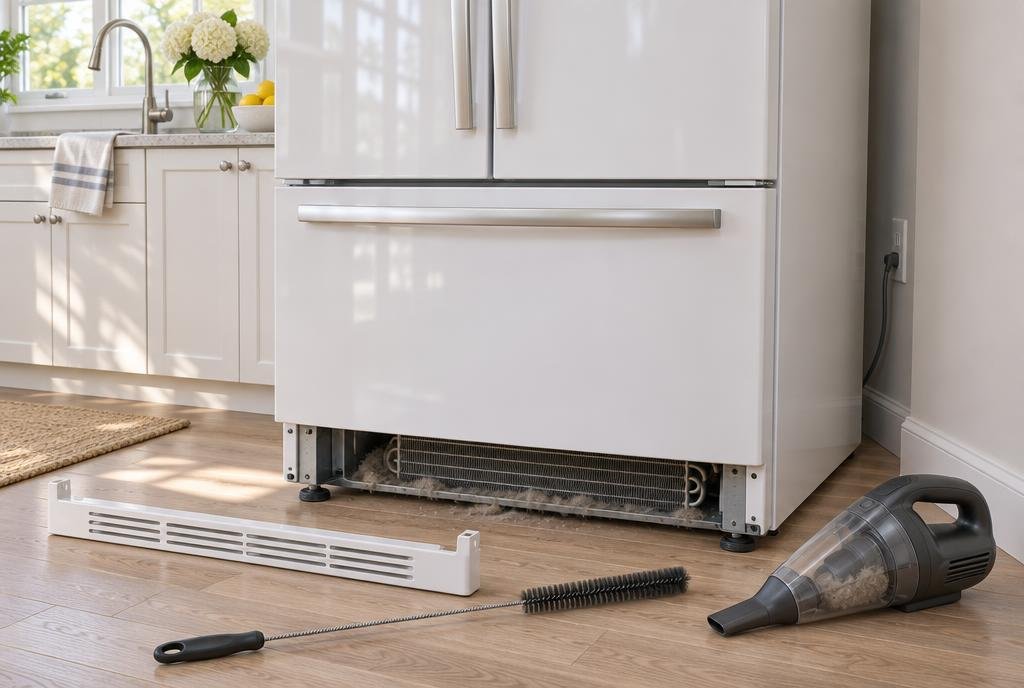
A refrigerator doesn’t create cold; it moves heat out of the inside of the fridge and releases it into your kitchen. That heat leaves through the condenser coils. When those coils are covered in dust, pet hair and kitchen grime, they can’t release heat efficiently. The compressor has to run longer and harder to do the same job.
Signs your coils may need cleaning:
- The fridge seems to run constantly
- It feels warmer inside than it should
- The sides or front bottom of the fridge feel unusually warm
- You hear the compressor working louder than usual
- Your home has pets, or the fridge hasn’t been pulled out in years
Where to find the coils
It depends on your model:
- Bottom-mounted coils: many modern fridges have them underneath, behind a removable grille (the kick plate) at the bottom front.
- Back-mounted coils: some, especially older models, have a black grid of coils on the back.
- Sealed systems: some refrigerators have coils that are not user-accessible or are designed to need less maintenance. Your owner’s manual will tell you.
How to clean refrigerator coils
What you need
- A refrigerator coil brush (long, narrow and flexible; inexpensive at hardware stores)
- A vacuum with a crevice tool or brush attachment
- A flashlight
- A screwdriver, if your kick plate is screwed on
Steps
- Unplug the refrigerator or turn it off at the circuit breaker. Food will be fine for the short time this takes if you keep the doors closed.
- Remove the kick plate at the bottom front, or carefully pull the fridge away from the wall to access back coils. Be careful not to damage the floor or kink the water line if your fridge has an ice maker.
- Vacuum loose dust from the grille area and around the coils.
- Use the coil brush to gently loosen dust between and under the coils. Work slowly; the coils and fan blades can be delicate.
- Vacuum again to pick up what the brush loosened.
- Wipe the kick plate, reattach it, push the fridge back (leaving a little space behind for airflow), and plug it back in.
Many manufacturers suggest cleaning the coils about once or twice a year, and more often if you have pets that shed.
Don’t forget the condenser fan
On many models, a small fan near the coils pushes air over them. If the fan blades are coated with dust, gently wipe or vacuum them while the fridge is unplugged. If the fan doesn’t spin when the fridge is running, that may need a repair.
The dollar-bill test for door seals
The rubber gasket around your fridge and freezer doors keeps cold air in. Over time, gaskets can get dirty, stiff, torn, or warped. A bad seal lets warm air leak in, which makes your fridge run more and can cause frost buildup and condensation.
How to test it
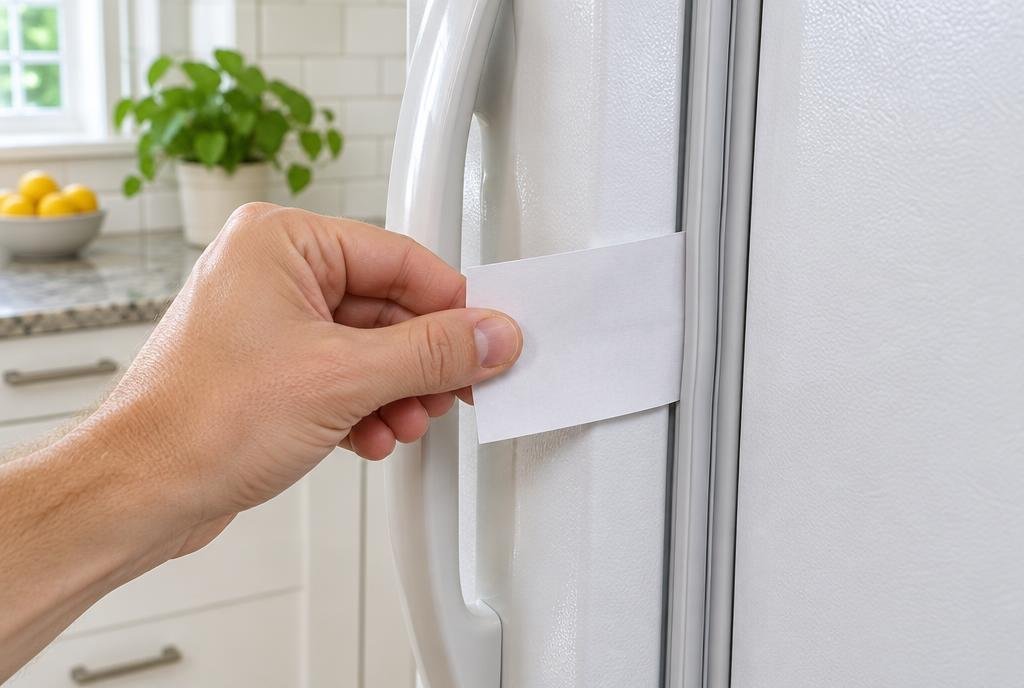
- Open the door and place a dollar bill (or a sheet of paper) so it’s half inside, half outside.
- Close the door on it.
- Gently pull the bill out. You should feel some resistance.
- If it slides out with no resistance, that part of the seal isn’t sealing well.
- Repeat at several points around the door, including corners and the hinge side.
You can also do the flashlight test: at night, put a flashlight inside the fridge pointing at the seal, close the door, and turn off the kitchen lights. Light leaking around the door shows a gap.
How to fix a weak seal
- Clean it. Sticky residue and crumbs can stop gaskets from sealing. Wash the gasket and the surface it touches with warm, soapy water, and dry them.
- Warm a warped gasket. A gasket that’s been bent can sometimes be reshaped by gently warming it with a hair dryer on low and pressing it into place. Don’t overheat it.
- Check the door alignment. If the fridge tilts forward or back unevenly, doors may not close properly. Many fridges have adjustable leveling feet; a slight backward tilt often helps doors swing shut.
- Replace it. If a gasket is torn or cracked, replacement gaskets are available for many models using your model number.
Check the temperatures
The FDA recommends keeping your fridge at or below 40°F and your freezer at 0°F. Place an appliance thermometer in a glass of water on a middle shelf and check after 24 hours. Adjust the controls gradually and recheck.
More fridge habits that help
Don’t block the vents
Cold air circulates inside the fridge through vents, often along the back wall or between the fridge and freezer. Pushing food right up against them can cause uneven cooling and frozen spots.
Keep the freezer reasonably full
A full freezer stays cold better when the door is opened, and frozen food helps it hold temperature during a power outage. If it’s nearly empty, a few containers of water can help. Don’t pack it so tightly that air can’t move.
Clean the drip pan and drain
Many fridges have a drip pan underneath that collects condensation. If it’s accessible, clean it occasionally to prevent odors. If water pools inside the fridge, the defrost drain may be clogged — your manual will explain how to clear it.
Replace the water filter on schedule
If your fridge has a water dispenser or ice maker, follow the manufacturer’s filter replacement interval, often around every six months.
Give it room
Fridges need space around them for air to flow and carry away heat. Check your manual for recommended clearance.
When to call a repair technician
- The fridge runs constantly and can’t keep temperature after you’ve cleaned the coils
- Frost builds up heavily in a frost-free freezer
- Loud clicking, buzzing or grinding
- Water leaking onto the floor
- The compressor isn’t running at all
Frequently asked questions
Is it safe to clean coils myself?
Yes, for most models, as long as you unplug the fridge first and work gently. Follow your manual.
How long can a fridge be unplugged?
Food stays safe in a closed refrigerator for about four hours without power, according to food safety guidance. Coil cleaning should take far less time.
Does a dirty coil really affect my energy bill?
Dirty coils make the compressor work harder and run longer, which uses more electricity. Cleaning them is an easy way to keep it running efficiently.
