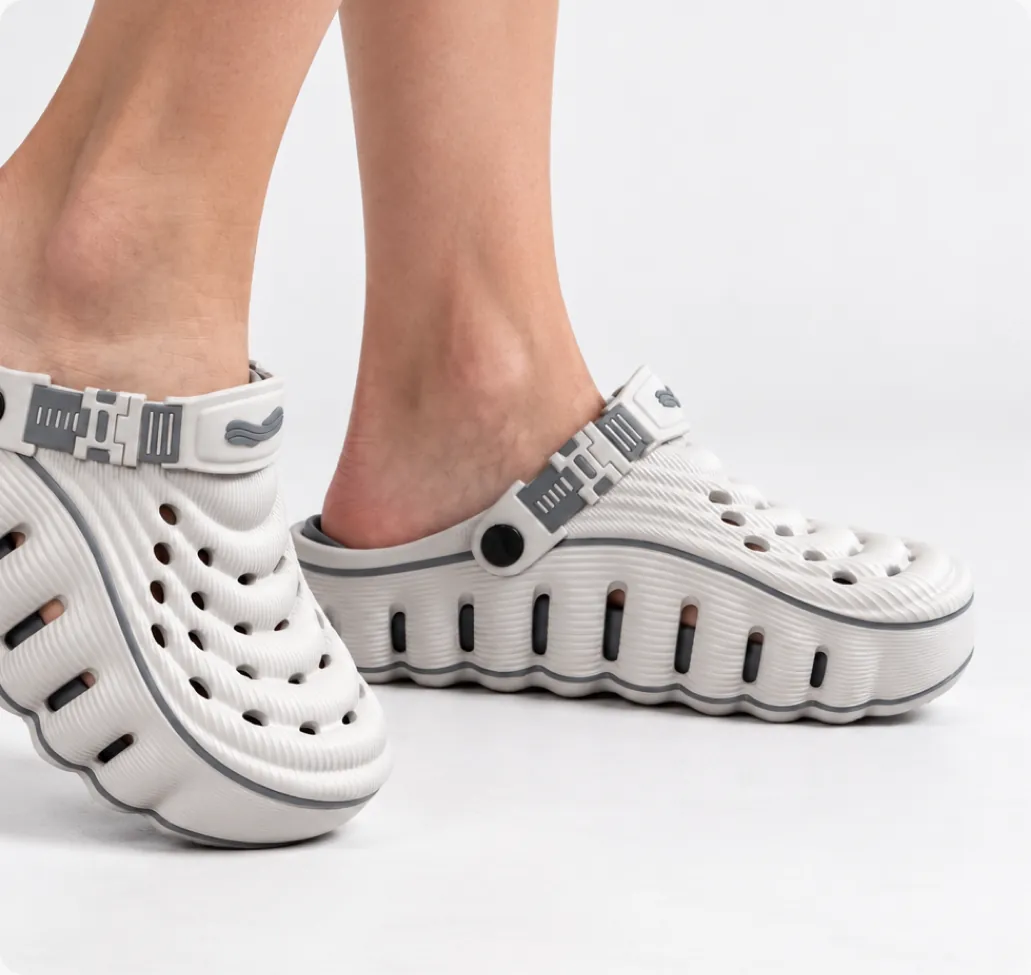
The most common question people ask before buying RESTORE Clogs online is simple: do they run small? Since you can’t try them on in a store, getting the size right the first time saves you the hassle of an exchange. Here’s everything you need to know about RESTORE Clogs sizing, plus a quick at-home method to measure your feet accurately.
The short answer
Grounded Footwear recommends ordering your usual shoe size, and sizing up if you’re between sizes. That second part is the key. Clogs are often sold in whole sizes or size ranges, so if you normally wear a half size, rounding down usually leads to a snug fit, which is the most common reason people feel clogs “run small.”
If you’re a true whole size and your feet don’t swell much during the day, your normal size is usually the right call.

How clogs are supposed to fit
Clogs fit differently from sneakers or dress shoes, which is why sizing confuses people. A well-fitting clog should have:
- A little space in front of your toes — roughly a finger’s width is typical. Your toes shouldn’t touch the front when you walk.
- A heel that sits in the heel cup without hanging off the back.
- Room to wiggle your toes, especially in a wide toe box design like RESTORE.
- Minimal sliding forward with each step.
Clogs are slip-on shoes, so they naturally feel a little roomier than a laced shoe. That’s normal. What you want to avoid is your toes pressing against the front, or your arch support sitting in the wrong place because the shoe is too short or too long.
When you should size up
- You’re between sizes, such as an 8.5 in women’s.
- Your feet swell during long shifts, in hot weather, or later in the day.
- You’ll wear thick socks with them, especially in winter.
- You have bunions or wide feet and your current shoes feel snug at the widest part.
- Your two feet are different sizes, which is very common. Size for the larger foot.
When your usual size is right
- You wear a whole size consistently in most brands.
- You have narrow or average-width feet.
- You’ll wear them barefoot or with thin socks around the house.
How to measure your feet at home
This takes about five minutes and is the most reliable way to choose a size from any online size chart.
- Measure at the end of the day. Feet are usually slightly larger in the evening.
- Tape a sheet of paper to the floor against a wall.
- Stand on the paper with your heel against the wall, wearing the socks you’ll usually wear with the clogs.
- Mark the tip of your longest toe with a pencil held straight up. Your longest toe isn’t always the big toe.
- Measure from the wall to the mark in inches or centimeters.
- Repeat for the other foot and use the longer measurement.
- Compare to the size chart on the RESTORE Clogs order page.
Tip: if your measurement falls at the top end of a size on the chart, choose the next size up.
Men’s vs women’s sizing
Many clogs are unisex or list both men’s and women’s sizes. As a rough rule, a men’s size is about 1.5 sizes smaller than the equivalent women’s size, so a women’s 9 is approximately a men’s 7.5. Always use the specific chart on the order page rather than converting from memory, since conversions can vary slightly between brands.
What if they don’t fit?
This is where RESTORE Clogs make online buying less stressful. The brand advertises a Fit Guarantee with free size exchanges, plus a 90-day money-back guarantee. A few tips to make exchanges smooth:
- Try them on indoors on a clean floor first, so they stay in returnable condition.
- Keep the original packaging until you’re sure about the fit.
- Check the current return and exchange terms at checkout, including who pays return shipping.
- Request the exchange early rather than waiting until the end of the window.
Breaking them in
Molded foam clogs usually don’t need much break-in, but your feet may need a few days to get used to built-in arch support if you’re coming from flat shoes or going barefoot. Start with a few hours at a time around the house before wearing them for a full shift. Mild arch awareness for a few days is common; real pain or rubbing isn’t, and is a sign the fit isn’t right.
Signs your clogs are the wrong size
| Sign | Likely problem |
|---|---|
| Toes touch or rub the front | Too small — size up |
| Heel hangs off the back | Too small |
| Foot slides forward a lot when walking | Too big, or try using the heel strap |
| Arch support feels like it’s in the wrong spot | Length is off in either direction |
| Pressure on the sides of the foot | Too narrow for you — size up |
Bottom line
RESTORE Clogs don’t run dramatically small, but they’re easiest to get right if you follow the brand’s advice: your usual size if you’re a whole size, one size up if you’re in between. Measure at the end of the day, size for your larger foot, and use the free exchange if needed. For more on the clogs themselves, read our full RESTORE Clogs review.
Frequently asked questions
Should I size up or down in RESTORE Clogs?
Size up if you’re between sizes. Don’t size down; a too-short clog puts your toes against the front and moves the arch support out of position.
Can I wear RESTORE Clogs with socks?
Yes. If you plan to wear thick socks, consider sizing up.
Are RESTORE Clogs good for wide feet?
They’re designed with a wide toe box and a broad base, which many people with wide feet prefer.
