White vinegar has a near-mythical reputation as the do-everything cleaner. It’s cheap, it’s non-toxic, and it genuinely works on a lot of jobs: hard-water spots on glass, soap scum, coffee maker scale, and stale smells. But the very thing that makes vinegar useful — it’s an acid, typically about 5% acetic acid — is also what makes it destructive on the wrong surfaces.
If you’ve been spraying vinegar on everything in the house, there’s a decent chance you’ve already done some slow, invisible damage. Here are the surfaces and situations where vinegar is the wrong tool, why, and what to grab instead.
Why vinegar works — and why it backfires
Vinegar dissolves alkaline mineral deposits like limescale and the chalky film left behind by hard water. That’s its superpower. The problem is that many surfaces in your home are also alkaline or acid-sensitive, and vinegar doesn’t know the difference between a mineral deposit and your marble countertop. It also isn’t a strong degreaser and it isn’t an EPA-registered disinfectant, so on many jobs it’s simply the weaker choice.
1. Marble, limestone and travertine
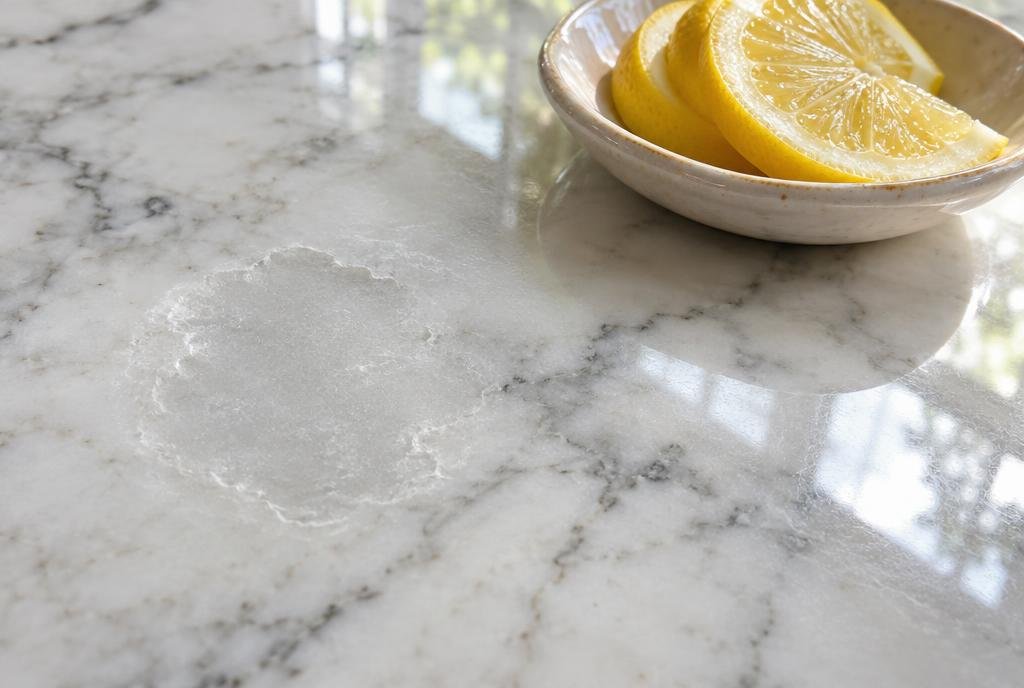
Natural calcium-based stones react with acid. Vinegar (and lemon juice, and many “natural” sprays that contain them) causes etching — dull, cloudy marks that look like water spots but are actually tiny bits of the stone’s surface that have been chemically eaten away. Etching can’t be wiped off; it usually needs professional polishing.
Use instead: warm water with a few drops of mild dish soap, or a cleaner labeled pH-neutral and safe for natural stone. Dry with a soft microfiber cloth.
2. Granite and quartz countertops
Granite is tougher than marble, but most granite counters are protected by a sealer, and repeated acid exposure breaks that sealer down over time. Once it’s gone, the stone becomes more absorbent and stains more easily. Engineered quartz is mostly stone held together with resin, and many manufacturers specifically warn against acidic and high-alkaline cleaners.
Use instead: dish soap and water for daily cleaning. For disinfecting, use a product your countertop manufacturer approves, or 70% isopropyl alcohol diluted with water, which evaporates quickly and won’t attack the sealer.
3. Hardwood floors
A common internet recipe says to mop wood floors with diluted vinegar. Many flooring manufacturers disagree. Over time, the acid dulls the polyurethane finish, leaving floors looking hazy no matter how often you clean them. Excess water, in general, is also bad for wood.
Use instead: a cleaner made for finished hardwood, applied with a barely damp (not wet) microfiber mop.
4. Your phone, laptop and TV screens
Modern screens have oleophobic (oil-repelling) and anti-glare coatings. Acidic cleaners can strip them, leaving your screen more prone to smudges and glare. Apple, for example, recommends a soft, slightly damp lint-free cloth and warns against harsh cleaners.
Use instead: a dry microfiber cloth for smudges, or a cloth lightly dampened with water. Many device makers allow 70% isopropyl wipes on hard surfaces — check your manufacturer’s guidance first.
5. Cast iron and knives
Vinegar strips the seasoning — the polymerized oil layer — off cast iron pans, and it can promote rust on bare iron and on carbon-steel knives. Soaking a knife in vinegar can also pit the edge.
Use instead: for cast iron, hot water and a brush or chain-mail scrubber, then dry on the stove and wipe with a thin layer of oil. For knives, warm soapy water and immediate drying.
6. Rubber seals and hoses in appliances
Running vinegar through your washing machine or dishwasher every week is a popular “deep clean” hack. The concern is that frequent exposure to acid can degrade rubber gaskets and hoses over time, and some appliance manufacturers advise against it.
Use instead: the cleaning cycle and the cleaner recommended in your owner’s manual — usually a dedicated washer or dishwasher cleaner tablet. An occasional vinegar rinse is unlikely to ruin anything, but don’t make it a weekly ritual.
7. Grout that isn’t sealed
Cementitious grout is porous and alkaline. Repeated acid cleaning can erode it, making it crumbly and more likely to collect dirt.
Use instead: a paste of baking soda and water with a stiff brush, or an oxygen-based cleaner (sodium percarbonate) dissolved in warm water. Seal grout after a deep clean so it stays cleaner longer.
8. Egg spills
This sounds odd, but it’s a classic cleaner’s tip: acid causes egg proteins to coagulate, turning a runny mess into a gluey one that’s harder to lift. The same principle is why a splash of vinegar helps poached eggs hold together.
Use instead: sprinkle salt on the spill to firm it up, then scoop and wipe with cold soapy water.
9. Anything you want to actually disinfect
Vinegar kills some microbes, but it is not registered with the EPA as a disinfectant and doesn’t reliably kill the germs you’re usually worried about on cutting boards, bathroom fixtures and doorknobs.
Use instead: an EPA-registered disinfectant used according to its label — including leaving the surface wet for the stated contact time — or a properly diluted bleach solution on surfaces that can handle it.
The combinations you should never mix
This is the part that matters most for safety. Some cleaner combinations create toxic gases or corrosive liquids:
- Vinegar + bleach: the acid causes bleach to release chlorine gas, which irritates the eyes, throat and lungs even at low levels. Never combine them — and be careful about using them back-to-back in a small bathroom.
- Bleach + ammonia: produces chloramine vapors. Ammonia is found in some glass cleaners, so don’t follow a bleach scrub with a window spray in the same area.
- Vinegar + hydrogen peroxide in one bottle: forms peracetic acid, which is corrosive. Using them one after the other on a surface is a different story, but don’t premix and store them.
- Different drain cleaners: mixing two chemical drain products can cause violent reactions and splashing.
Rule of thumb: one product at a time, rinse in between, and keep the room ventilated.
The baking soda and vinegar myth
The fizzing volcano looks like it must be doing something. Chemically, though, baking soda (a base) and vinegar (an acid) neutralize each other and produce carbon dioxide, water and sodium acetate. Most of the cleaning power of each ingredient is cancelled out. The bubbles can loosen a little debris, but you’d usually get better results using each one separately: baking soda as a gentle abrasive paste, vinegar on its own for mineral deposits.
Where vinegar really shines
None of this means you should throw your vinegar away. It’s excellent for:
- Glass and mirrors (diluted about 1:1 with water)
- Descaling kettles, coffee makers and showerheads (check your coffee maker’s manual)
- Removing hard-water film from glass shower doors and faucets — on chrome, rinse afterward
- Neutralizing odors in a microwave (heat a bowl of water and vinegar for a few minutes, then wipe)
- Soaking a crusty showerhead overnight in a bag of vinegar
A simple rule for any surface
Before you try a new cleaner, test it on an inconspicuous spot and check the manufacturer’s care guide. When in doubt, plain warm water with a little dish soap is the safest starting point for almost everything in your home — it’s what professional cleaners reach for first, too.
Frequently asked questions
Is cleaning vinegar different from regular white vinegar?
Yes. “Cleaning vinegar” is often around 6% acidity versus about 5% for standard distilled white vinegar, so it’s slightly stronger — and slightly more likely to damage sensitive surfaces.
Can I use vinegar on stainless steel?
Diluted vinegar is generally fine for removing water spots on stainless steel, but wipe in the direction of the grain and dry afterward. Avoid letting it sit, and avoid it entirely on finishes your manufacturer says to protect.
What if I’ve already etched my marble?
Light etching can sometimes be improved with a marble polishing powder, but deeper damage needs a stone restoration professional. Going forward, switch to a pH-neutral cleaner and use coasters under acidic drinks.
