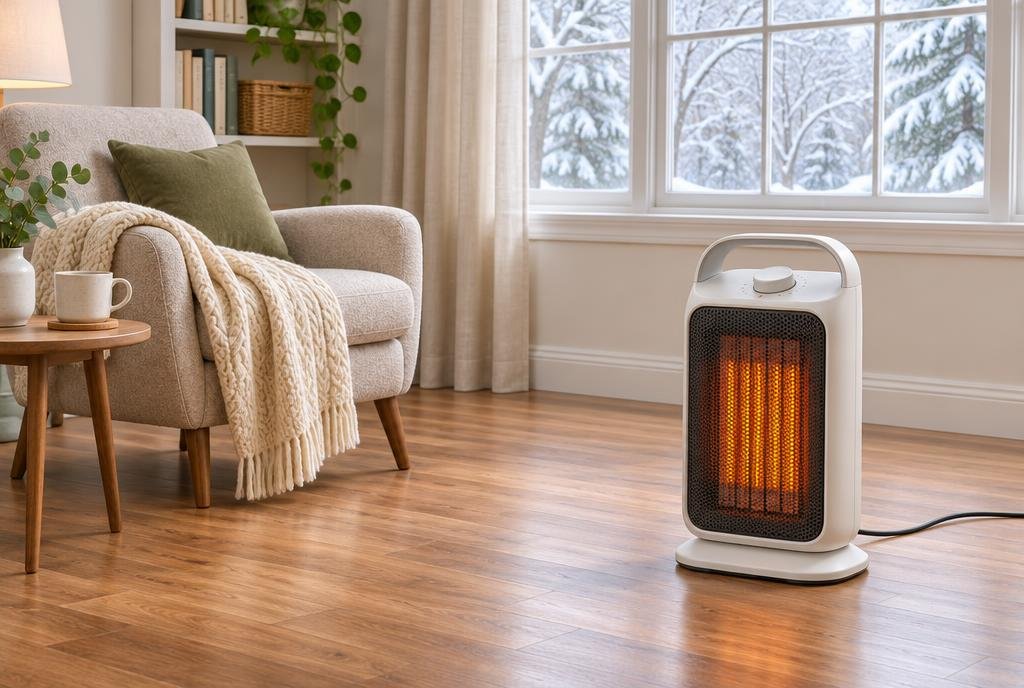
When the first real cold snap hits, a lot of people reach for a space heater instead of the thermostat, figuring a little plug-in heater must be cheaper than warming the whole house. Sometimes that’s true. Often it isn’t, and the difference comes down to one detail most people never think about.
Here’s how to figure out what a space heater actually costs to run, the specific situations where it saves money, the ones where it quietly raises your bill, and the safety rules that matter far more than the savings.
The short answer
A space heater saves money only when it lets you turn down the heat for the rest of the house. If you run a space heater in one room while the furnace keeps every other room at the usual temperature, you’re paying for both, and your bill goes up.
The U.S. Department of Energy says small space heaters can make sense when you only want to heat one room, or when you’ll only be in a room for a short time. The key word is “only.” The heater is supposed to replace whole-house heating for a few hours, not add to it.
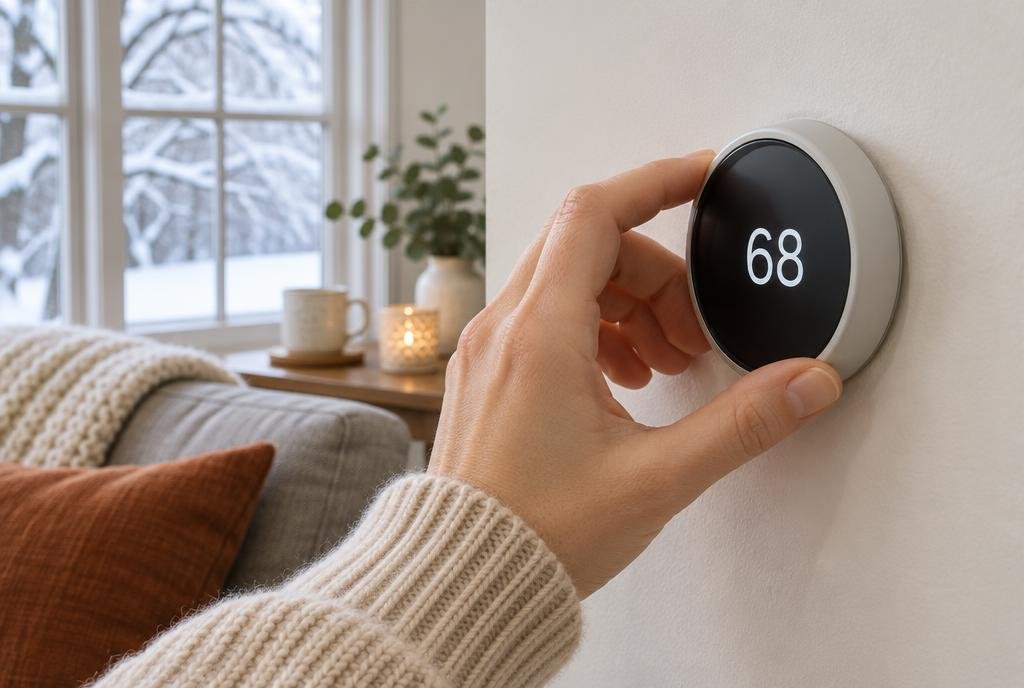
How much does a space heater cost to run?
You can work this out in under a minute with the label on the heater and your electric bill.
The formula
- Find the wattage on the heater’s label. Most plug-in heaters max out around 1,500 watts.
- Divide by 1,000 to get kilowatts. A 1,500-watt heater uses 1.5 kilowatt-hours (kWh) for every hour it runs at full power.
- Multiply by your electricity rate, which is printed on your bill in cents or dollars per kWh.
A real example
The U.S. Energy Information Administration estimates the average residential electricity price in 2026 at roughly 18 cents per kWh, though rates vary enormously by state. At that price, a 1,500-watt heater running flat out costs:
| Running time | 1,500 W on high | 750 W on low |
|---|---|---|
| 1 hour | About $0.27 | About $0.14 |
| 8 hours | About $2.16 | About $1.08 |
| 8 hours a day for 30 days | About $65 | About $32 |
These are worst-case numbers at full power, using an 18-cent rate. A heater with a built-in thermostat cycles on and off once the room warms up, so real-world use is often lower. On the other hand, if you live in a high-cost state where electricity runs 25 to 30 cents per kWh or more, multiply accordingly. Always use the rate on your own bill.
Tip: Ignore any heater ad that promises “miracle” efficiency. Every electric resistance heater, whether it’s a ceramic cube, an oil-filled radiator or a wall-plug gadget, turns electricity into heat at essentially the same rate. A 1,500-watt heater uses 1.5 kWh per hour no matter what the box says. Design affects how the heat feels and spreads, not how much energy it takes.
When a space heater saves money
You heat one room and turn the rest of the house down
This is the classic win. If you work from a home office all day, you could lower the main thermostat several degrees and keep just that room comfortable. The Department of Energy estimates you can save as much as 10% a year on heating and cooling by turning your thermostat back 7 to 10°F for 8 hours a day from its normal setting. A space heater can make that setback livable.
You only need heat for a short time
Warming a bathroom for a few minutes before a shower, or taking the chill off a room you’ll only use for an hour, is a good use. Firing up the whole system for that would be wasteful.
One room is always colder than the rest
A chilly bedroom over the garage or a room at the end of a long duct run can make you crank the thermostat for the entire house. Heating just that room can be cheaper than overheating everywhere else. That said, it’s worth asking why the room is cold. Our guide to finding and fixing drafts with a stick of incense can uncover leaks that a heater would just be fighting.
When a space heater costs you more
You don’t touch the thermostat
If the furnace keeps running at the usual temperature, the space heater’s cost is pure addition. Worse, if the heater sits near the thermostat, it can trick it into thinking the house is warm, leaving the rest of your home colder than you want.
You’re replacing a heat pump
Heat pumps move heat rather than generating it, so they can often deliver more warmth per kWh than an electric space heater. If your home is heated by a heat pump, a resistance space heater may be the more expensive way to stay warm. Some energy agencies also note that deep setbacks can make heat pumps run less efficiently, since they may lean on backup electric heat strips to catch up. Check your system’s manual or ask your installer before setting it way back.
You’re running several heaters at once
Two or three space heaters on high for hours can easily cost more than your central system would, and they increase the load on your home’s circuits.
You’re closing vents in unused rooms
A related habit that often backfires: shutting the supply registers in empty rooms to “save heat.” In many forced-air systems this raises pressure in the ductwork and can make the system work harder without saving much. Lowering the thermostat is the more reliable lever.
Space heater safety: the rules that matter most
Saving a few dollars is never worth a fire, and heating equipment is one of the leading causes of home fires in the U.S. The National Fire Protection Association (NFPA) reports that fire departments responded to an average of nearly 39,000 home heating fires a year from 2019 to 2023, and space heaters are involved in the majority of home heating fire deaths. December, January and February are the peak months.
Placement
- Keep the heater at least 3 feet from anything that can burn, including curtains, bedding, upholstered furniture, clothing and paper. Heating equipment too close to flammable items is a leading factor in fatal home heating fires.
- Set it on a hard, flat, level surface, not a rug, bed or table.
- Keep a 3-foot “kid-free zone” around it, and keep pets away too.
Power
- Plug it directly into a wall outlet. Don’t use a power strip.
- Avoid extension cords. The Department of Energy says if one is truly unavoidable, use the shortest heavy-duty cord possible, 14-gauge wire or larger.
- Don’t run the cord under a rug, and don’t share the outlet with other high-power appliances.
- If the plug, cord or outlet feels hot, unplug the heater and have it checked.
Features to look for
- A tip-over switch that shuts the heater off if it’s knocked over.
- Overheat protection that cuts power if internal parts get too hot.
- A safety certification mark from a recognized testing lab, such as UL, ETL or CSA.
- A built-in thermostat, which saves energy by cycling instead of running nonstop.
Habits
- Turn it off when you leave the room and before you go to sleep.
- Make sure your smoke alarms work. If you also use any fuel-burning heat, have working carbon monoxide alarms too.
Space heater or thermostat? A quick decision guide
| Your situation | Better choice |
|---|---|
| Home alone, working in one room all day | Space heater plus a lower thermostat |
| Whole family spread across the house | Central heat |
| Quick warm-up of a bathroom or small room | Space heater, turned off afterward |
| Home heated by a heat pump | Usually the heat pump; check your manual before big setbacks |
| Overnight in a bedroom | Lower thermostat plus warmer bedding; don’t run a heater while sleeping |
For more no-cost ways to trim your winter bill, see our list of home settings you can change today to lower your utility bills.
Frequently asked questions
Is it cheaper to run a space heater all night or turn up the heat?
Neither is ideal. Fire safety groups advise turning space heaters off before you go to sleep. A better approach for nighttime is lowering the thermostat and using warmer bedding, which takes advantage of the Department of Energy’s setback savings without leaving a heater running unattended.
Do oil-filled radiators use less electricity than other space heaters?
Not per hour at the same wattage. A 1,500-watt oil-filled radiator uses the same 1.5 kWh per hour as a 1,500-watt ceramic heater. The difference is that the oil holds heat and releases it gently, so the unit may cycle less often and feel more even. It’s about comfort, not magic efficiency.
How can I see exactly what my space heater costs?
If your utility offers an online account or app with hourly usage, compare a few days with the heater against a few similar days without it. The difference in kWh, multiplied by the rate on your bill, shows the real cost. That’s far more accurate than estimating, especially for heaters with thermostats that cycle on and off.
