
It sits by the sink, it looks harmless, and you use it to clean the very things you eat off. But that humble kitchen sponge is one of the germiest objects in most homes — often far more contaminated than a toilet seat.
The good news: a few small changes dramatically reduce the problem, and some of the “sanitizing” habits you may already use don’t work quite the way you’d think.
What researchers actually found
In a widely reported 2017 study published in Scientific Reports, researchers in Germany analyzed 14 used kitchen sponges. They identified 362 different species of bacteria, with densities in some parts of the sponges reaching levels comparable to those found in human stool samples.
The most surprising finding: sponges that their owners said were regularly “sanitized” — for example, by microwaving or boiling — did not have lower overall bacteria than sponges that weren’t. Some of them had a higher proportion of certain bacteria. The researchers suggested that cleaning kills the more vulnerable bacteria and leaves hardier ones to regrow and dominate. Their practical recommendation was to replace kitchen sponges regularly, such as weekly.
That doesn’t mean sanitizing is useless. Earlier research by the USDA’s Agricultural Research Service found that microwaving a wet sponge for one minute and running a sponge through the dishwasher both killed the vast majority of bacteria present. The catch is how fast a damp, food-rich sponge gets recolonized afterward.
Why sponges are such a bacteria magnet
- They stay wet. Moisture is the number one thing bacteria need.
- They’re full of food. Tiny bits of food trapped in the pores keep bacteria fed.
- They have enormous surface area. The porous structure gives bacteria endless places to grow.
- They sit at room temperature. Warm kitchens are ideal for growth.
Then you use that sponge to wipe the counter — spreading whatever is living in it across the surface where you prepare food.
How to keep your sponge cleaner
1. Replace it often
This is the single most effective step. Many food safety experts recommend replacing kitchen sponges every week or two. An easy way to remember: swap sponges on the same day you take out the recycling or buy groceries. If a sponge smells, it’s past due.
2. Sanitize between replacements
Sanitizing helps in the short term, even if it doesn’t make a sponge last forever. Two effective options:
- Microwave: soak the sponge so it’s fully wet (a dry sponge can catch fire), make sure it has no metal or scouring material with metal, and microwave on high for about one minute. Let it cool before touching — it will be very hot.
- Dishwasher: run it on the top rack with a hot cycle and heated dry.
3. Let it dry out
Wring it out thoroughly after each use and store it somewhere it can dry, like a caddy that lets air circulate — not flat in a puddle at the bottom of the sink.
4. Don’t use it on raw meat juices
Use paper towels to wipe up juices from raw meat, poultry or seafood, then clean and disinfect the surface. Don’t let your sponge absorb those juices.
5. Keep separate sponges for separate jobs
Never use your dish sponge on the bathroom, floors, or the inside of the trash can.
Better alternatives to sponges
Dish brushes
A brush with plastic or silicone bristles dries much faster than a sponge, has less surface area for bacteria to hide, and can go in the dishwasher. Many people find they scrub more effectively too.
Dishcloths and microfiber cloths
Cloths can harbor bacteria too, but they’re easy to launder. Keep a stack and use a fresh one every day, washing used ones in hot water. Hang them to dry between uses during the day.
Silicone scrubbers
These don’t absorb water the way foam sponges do, which makes them less hospitable to bacteria. They’re not as good at absorbing spills, so many people pair them with cloths.
Your cutting boards need attention too
Cutting boards are the other big cross-contamination risk in the kitchen. Knife grooves create small crevices where bacteria can hide.
Use separate boards
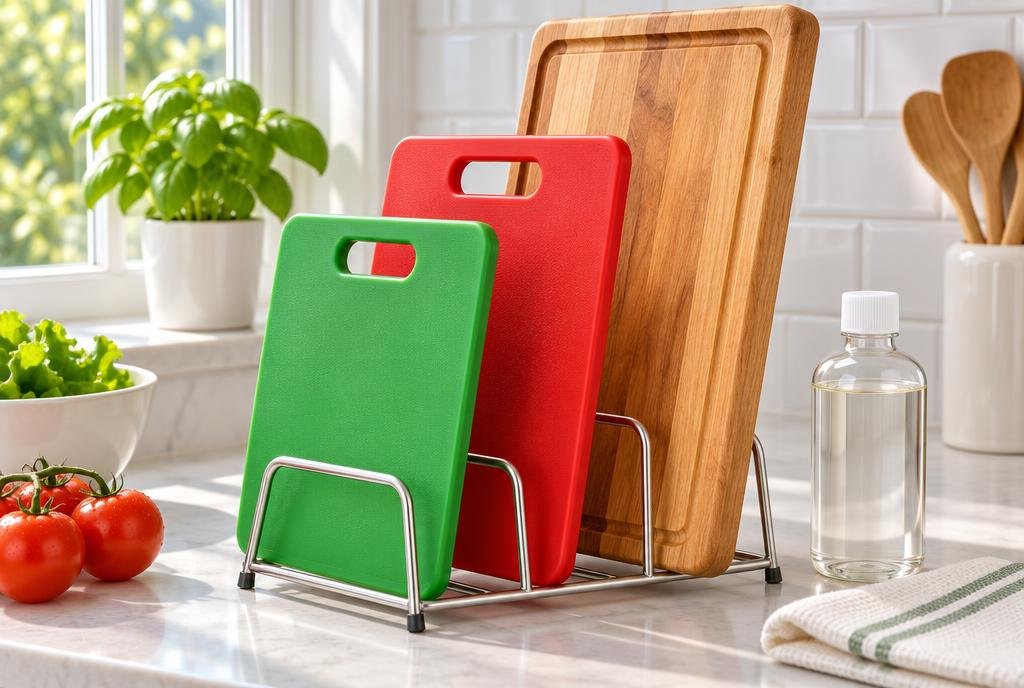
The USDA recommends using one cutting board for fresh produce and bread and a separate one for raw meat, poultry and seafood. Color-coded boards make this easy.
Plastic boards
Plastic and other nonporous boards can generally be washed in the dishwasher. Replace them when they’re deeply scarred, since deep grooves are hard to clean.
Wooden boards
- Wash with hot, soapy water right after use. Don’t soak them or put them in the dishwasher, which can warp and crack them.
- Dry them standing upright so air reaches both sides.
- Rub with food-grade mineral oil every few weeks to keep the wood from drying out and cracking.
- Sanitize after raw meat with a diluted bleach solution, following food safety guidance, then rinse and dry.
Other hidden germ hotspots in the kitchen
- The sink and drain: food particles and moisture make it a perfect breeding ground. Clean it regularly, not just the dishes in it.
- Faucet handles: you touch them with raw-chicken hands. Wipe them after handling raw meat.
- Refrigerator drawers: spills from produce and meat accumulate. Wash drawers with warm soapy water periodically.
- Kitchen towels: drying your hands and dishes with the same towel all week spreads germs. Swap them often.
- Can openers: the cutting wheel touches the food inside every can. Wash it after each use.
A simple weekly kitchen hygiene routine
- Swap in a new sponge or wash your brush in the dishwasher.
- Put used dishcloths and towels in a hot wash.
- Scrub the sink basin and wipe faucet handles.
- Wash cutting boards thoroughly and oil wooden ones as needed.
- Wipe out any spills in the fridge.
Frequently asked questions
Can I boil a sponge to clean it?
Boiling for a few minutes kills many bacteria, similar to microwaving. But it won’t stop a sponge from recolonizing quickly, so regular replacement is still the best approach.
Does soaking a sponge in bleach work?
Soaking in a diluted bleach solution can sanitize it. Rinse well afterward and never mix bleach with other cleaners.
What about antibacterial sponges?
They may slow bacterial growth inside the sponge, but they still need regular replacement and drying out to stay clean.
