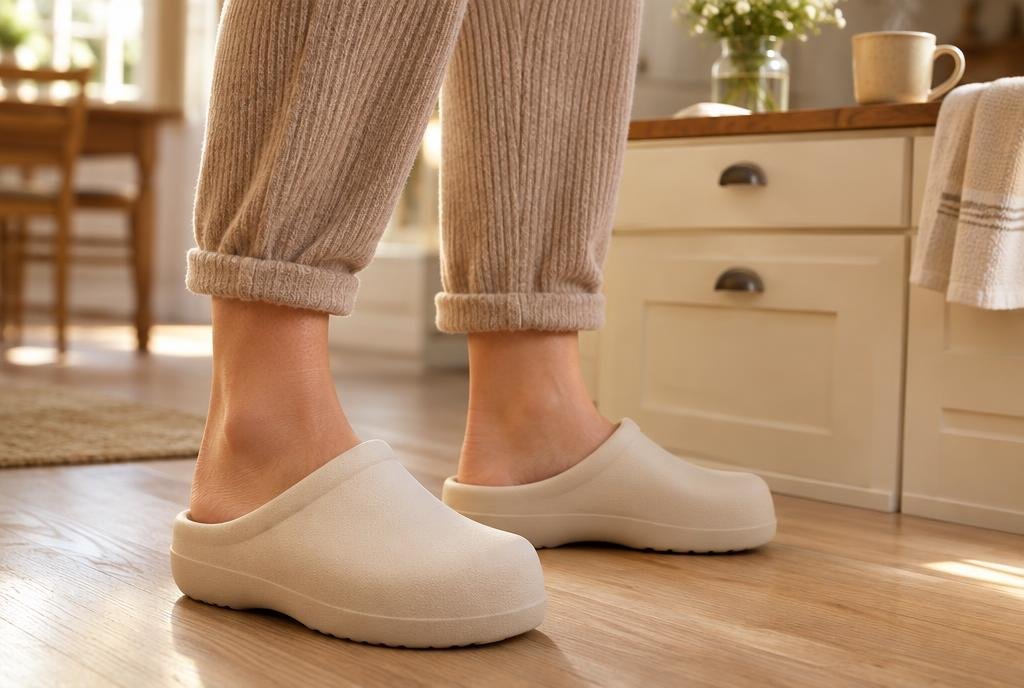
If your feet ache more on weekends than on workdays, your floors may be the reason. Tile, hardwood, laminate and concrete-slab floors don’t give, and most fuzzy slippers are just a flat layer of soft foam that squashes under your weight. The result is that your arches and heels do all the work, hour after hour, while you cook, clean and chase kids around.
The quick answer: the best house shoes with arch support have a contoured (not flat) footbed, cushioning that doesn’t bottom out, a grippy outsole for kitchens and bathrooms, and enough room in the toes that you’ll actually keep them on. Supportive clogs like RESTORE Clogs by Grounded Footwear check those boxes, but they aren’t the only option. Here’s how to choose.
This article is general information, not medical advice. If you have persistent foot, heel or arch pain, see a podiatrist.
Why your feet hurt more at home than you’d expect
Most people put real thought into work shoes and running shoes, then spend their evenings and weekends barefoot or in socks. At home you’re still on your feet a lot: standing at the stove, doing dishes, folding laundry, walking back and forth to the fridge. On a hard floor, nothing absorbs that impact except your feet.
A few common reasons home time leaves feet sore:
- No arch contour. Bare feet and flat slippers leave the arch without anything underneath it.
- Thin or soft-only cushioning. Plush foam feels nice for a minute, then compresses flat.
- Long standing sessions. Meal prep and cleanup can easily mean an hour or more in one spot.
- That first step in the morning. Many people notice heel discomfort most when they first get out of bed and walk across a cold, hard floor.
Footwear can make standing and walking more comfortable, but it doesn’t treat foot conditions. If you’ve been dealing with heel pain specifically, our guide to supportive clogs and heel pain goes deeper.
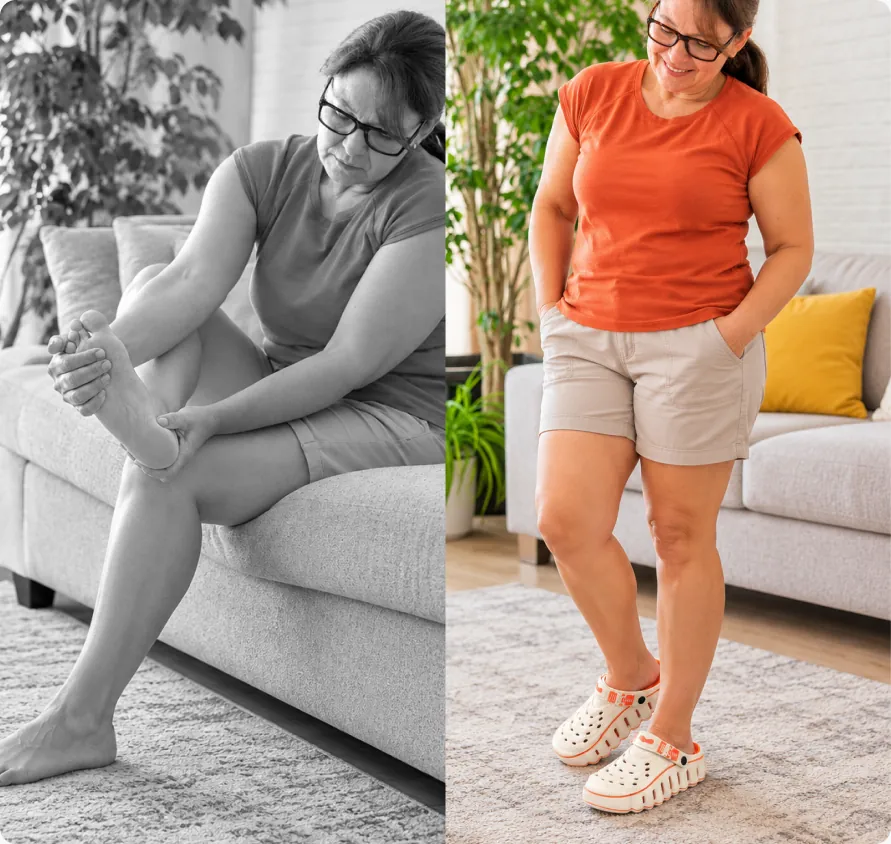
What to look for in house shoes with arch support
Use this checklist when you’re comparing options. A good indoor shoe should hit most of these points.
| Feature | Why it matters at home | Typical slipper | Supportive clog |
|---|---|---|---|
| Contoured footbed | Gives the arch something to rest on instead of a flat surface | Usually flat | Usually contoured |
| Cushioning that holds up | Softens each step on tile and wood without flattening out | Soft, compresses quickly | Thicker, springier foam |
| Slip-resistant outsole | Wet kitchen and bathroom floors are a real slip risk | Often smooth fabric or felt | Textured rubber or EVA tread |
| Roomy toe box | Toes can spread naturally; less pinching by evening | Varies | Often wide |
| Easy on and off | You’ll actually wear them if they slip on in a second | Yes | Yes |
| Washable or wipeable | Kitchens get messy | Fabric can stain | Foam usually wipes clean |
Warmth is the one area where a classic fleece slipper wins. If you want both, wearing a supportive clog with warm socks in winter is a simple compromise.
Where RESTORE Clogs fit as a house shoe
RESTORE Clogs from Grounded Footwear are built as all-day comfort clogs, and several of their features line up with what you want indoors:
- Contoured orthopedic footbed with built-in arch support, so you’re not standing on a flat slab.
- ReviveFoam EVA cushioning that’s thick but lightweight, which helps on unforgiving tile and hardwood.
- Massage-style textured footbed, which some people like for barefoot or thin-sock wear around the house.
- Wide toe box and broad, foot-shaped base for room and a stable stance while you’re standing at the counter.
- Textured slip-resistant outsole designed for wet and dry surfaces, useful near sinks, tubs and freshly mopped floors.
- Slip-on design, so they’re easy to grab on the way to the coffee maker.
Because the foam wipes clean and the outsole grips, they also work as “doorstep shoes” for taking out the trash, getting the mail or stepping into the garage, something a felt-soled slipper can’t really handle.
A few honest trade-offs
Clogs aren’t perfect house shoes for everyone. An open-back clog isn’t as warm as a lined bootie slipper. Some people find a contoured footbed takes a few days of short wear to feel normal, especially if they’re used to walking barefoot. And RESTORE Clogs are sold mainly online through official offer pages, so you can’t try them on in a store first. That makes the brand’s sizing advice and exchange policy worth reading before you order.
Tip: Keep your supportive house shoes right next to the bed. That first walk to the bathroom or kitchen in the morning is when many people feel their feet most, and it’s the step most of us take barefoot.
Getting the fit right for indoor wear
House shoes tend to be worn longer than people realize, so fit matters. Grounded Footwear recommends ordering your usual size and sizing up if you’re between sizes. If you plan to wear thicker winter socks with them, that’s another reason to lean toward the larger size. Our full guide on whether RESTORE Clogs run small walks through it in detail.
The brand offers a Fit Guarantee with free size exchanges, plus a 90-day money-back guarantee. Terms can change, so check the current details at checkout before you buy.
Who benefits most from supportive house shoes
- People with hard floors throughout the house, especially tile kitchens and concrete-slab homes.
- Home cooks and bakers who stand at the counter for long stretches.
- Remote workers who are home all day and walk around between calls.
- Anyone who stands all day at work and wants their feet to keep getting support after the work shoes come off. If that’s you, see our roundup of the best clogs for standing all day.
- Older adults who want a slip-on with a grippy sole rather than smooth-bottomed slippers.
If you have diabetes, numbness in your feet, a recent injury or ongoing pain, talk to a podiatrist or your doctor about footwear before relying on any off-the-shelf shoe.
Supportive house shoes vs. going barefoot
Going barefoot at home isn’t “bad” for everyone, and plenty of people do it comfortably on carpet or for short periods. The issue is long stretches on hard surfaces. If you notice your feet, heels or lower legs feel tired by evening, it’s a reasonable experiment to wear a supportive house shoe for a week or two and see how you feel. If nothing changes, or things get worse, that’s a sign to get your feet checked rather than keep swapping shoes.
Frequently asked questions
Are clogs good house shoes?
For many people, yes. A clog with a contoured footbed, thick cushioning and a slip-resistant outsole gives more structure than a typical soft slipper, slips on easily and can handle a quick trip outside. The main trade-off is warmth, which you can fix with socks.
Can I wear RESTORE Clogs around the house all day?
They’re designed as all-day comfort clogs, so wearing them indoors is a natural use. If you’re used to going barefoot, start with a few hours a day and build up while your feet get used to the arch contour.
Do I need a different size for house shoes?
Not usually. Start with your normal size and size up if you’re between sizes or plan to wear thick socks. The Fit Guarantee’s free size exchanges help if the first pair isn’t right.
If your feet are tired of tile and hardwood, swapping flat slippers for a supportive clog is one of the simplest changes you can make at home. Read our full RESTORE Clogs review for more detail, or check the current offer below.
See Today's RESTORE Clogs Offer →
