
Nurses are some of the hardest-working feet on the planet. Twelve-hour shifts, hard hospital floors, constant movement between rooms, and very little time to sit down. It’s no wonder nurses are always searching for footwear that actually helps. RESTORE Clogs come up often in that search, so we looked at how well they fit the real demands of nursing.
What nurses need from a work shoe
Before looking at any specific clog, it helps to know what matters most on a long shift:
- Support: arch support and cushioning to reduce foot fatigue on hard floors.
- Grip: slip resistance for wet floors and spills.
- Easy cleaning: shoes you can wipe down or rinse after exposure to fluids.
- Room for swelling: feet often swell over a long shift.
- Stability: for quick movements and helping patients.
- Policy compliance: many facilities have rules about closed toes, closed backs, holes in uppers and slip-resistance.
How RESTORE Clogs fit those needs
Support and cushioning
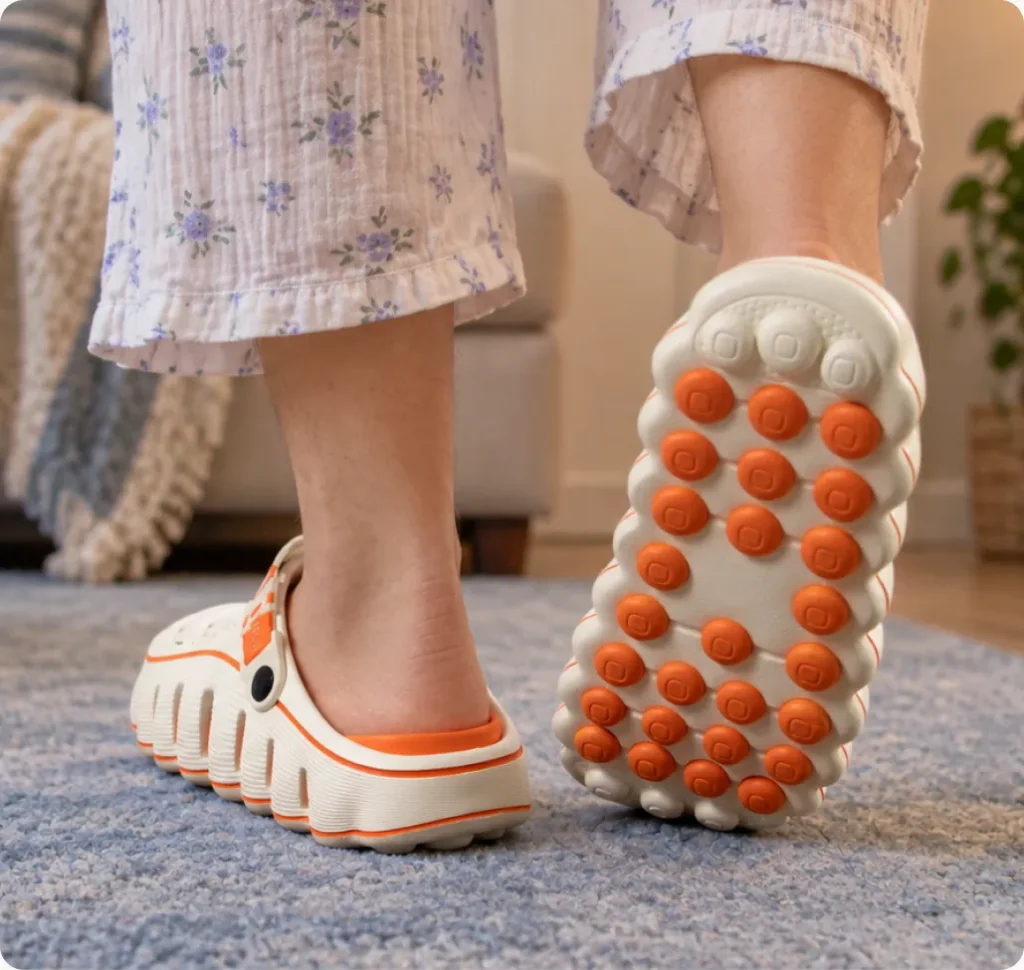
RESTORE Clogs are built around a contoured orthopedic footbed with built-in arch support and ReviveFoam EVA cushioning. That combination is the main reason they appeal to people on their feet all day. A flat footbed can leave your arches aching by the end of a shift; built-in arch support helps distribute pressure more evenly.
Grip
The outsole is textured and described by the brand as slip-resistant on wet and dry surfaces. If your hospital requires footwear meeting a specific slip-resistance standard, confirm that before relying on any clog for work.
Cleaning
Foam clogs are easy to rinse with soap and water, which is a big reason clogs are popular in healthcare. Let them air-dry away from direct heat.
Room for swelling
The wide toe box gives toes room to spread, which helps when feet swell late in a shift. If you’re between sizes, size up. See our RESTORE Clogs sizing guide for details.
Stability
A broad, foot-shaped base helps with stability. Clogs with a back strap add security for fast movements; check the current design on the order page.
Check your hospital’s dress code first
This is the most important step. Footwear policies vary widely between hospitals, units and roles. Some common rules include:
- Closed-toe shoes required
- Closed-back or strapped heels required in some units
- No holes or vents in the upper, to protect against spills and sharps
- Fluid-resistant materials
- Slip-resistant soles
RESTORE Clogs are a great fit for many settings, especially clinics, outpatient care, home health and time off your feet after a shift. For the OR, ER or units with strict rules, double-check with your manager before switching.
Pros and cons for nurses
Pros
- Built-in arch support for long shifts
- Cushioned, lightweight foam
- Wide toe box for end-of-shift swelling
- Easy to rinse and clean
- 90-day money-back guarantee and free size exchanges
Cons
- May not meet every facility's dress code
- Can't try on in a store before buying
- Foam compresses over months of daily use, like all work shoes
Tips for surviving 12-hour shifts
- Rotate two pairs of shoes. Giving foam time to recover between shifts helps it last longer.
- Wear compression socks if you’re prone to swelling or achy legs. Talk to your doctor if you have circulation issues.
- Change socks mid-shift on long days; fresh, dry socks feel surprisingly good.
- Stretch on breaks: calf stretches against a wall and ankle circles take a minute.
- Elevate your feet after work to help reduce swelling.
- Stay hydrated — dehydration makes fatigue worse.
- Replace shoes regularly. If the cushioning feels flat, it’s time.
- Keep a supportive pair at home too. Many nurses switch into recovery clogs after their shift instead of going barefoot.
RESTORE Clogs as a recovery shoe
Even if your unit requires a different work shoe, RESTORE Clogs can still be useful. Many healthcare workers keep a supportive pair for the commute home, for time around the house, or for days off when their feet need a break from stiff work shoes. Supportive footwear at home often makes more difference than people expect.
A great gift for nurses
If you’re shopping for a nurse in your life, supportive clogs are a practical and appreciated gift. Pair them with compression socks and a good water bottle. See our full list of the best gifts for nurses for more ideas.
Our verdict
RESTORE Clogs offer the core features nurses look for — arch support, cushioning, grip, a roomy toe box and easy cleaning — in a lightweight slip-on. They’re a strong choice for many nursing roles and an excellent recovery shoe for after work. Just confirm your facility’s footwear policy before making them your main work shoe. For a broader look at options, see our guide to the best clogs for standing all day.
Frequently asked questions
Why do so many nurses wear clogs?
Clogs are easy to slip on and off, easy to clean, and many designs offer good support and a roomy fit for long shifts.
Are RESTORE Clogs allowed in hospitals?
It depends on your facility’s dress code. Check rules about closed backs, vents and slip-resistance.
How often should nurses replace their work shoes?
Many replace them every six to twelve months with daily use, or sooner if cushioning feels flat or the tread is worn.
